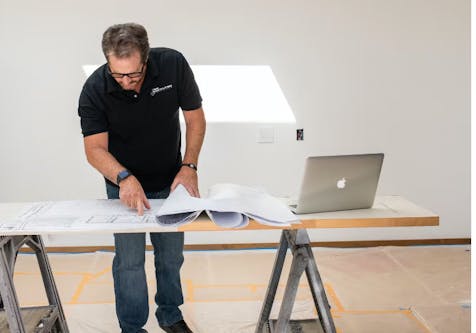

Whatever the size of the construction company or the scale of the building proposal, budgeting is a critical part of any construction planning, ensuring the project gets off the ground and through to completion on time and without overspending.
At the beginning of a construction project's lifecycle, the budget determines what is affordable and achievable, and helps anticipate the overall cost of the project. Then, as the project progresses, a building construction budget becomes the baseline for keeping everything on track, expenses accounted for, and a clear outline for the client to understand the costs and timings.
The significance of robust construction budgeting cannot be underestimated when it comes to the success of the project and the building company itself. With detailed construction budget tracking, a building company can ensure jobs are successfully delivered, and are profitable, as well as being able to generate accurate estimates for future jobs and scale the business accordingly.
Here we offer tips on how to create a construction budget to ensure the ultimate success of your construction projects and building business.
Jump straight to the section you’re most interested in:

Key Components of a Construction Budget
Unlike other budgets, construction budgets involve unique and unforeseen costs. Here are the crucial factors that must be included in your construction project budget and plan:
Direct and Indirect Costs
Direct costs are everything that is attributed to the physical construction of the building, such as materials, equipment, and labour and contractor fees. Indirect costs, on the other hand, relate to costs that support the construction site, such as temporary site facilities, permits and insurance. Direct costs affect the profitability of each individual project, whereas indirect costs hit the company's profit margins.
Hard and Soft Costs
Hard costs are similar to direct costs as they cover things like general contractor wages, but also include subcontractor bills, like electricians and plumbers costs, and raw materials, like finishing materials, fixtures, and appliances. Soft costs cover fees for professionals like architects, structural engineers, interior and landscape designers, and any financing or legal fees.
Material Costs
Calculating the cost of all materials required for the project is vitally important in the budgeting process. They are a large proportion of the construction budget and therefore must be accurately costed up so project managers have financial visibility on where to cut costs or relocate resources if necessary. Unlike other costs, like labour, prices for materials can be negotiated, especially if there is a good relationship with a supplier, and therefore the construction budget is helpful in showing where possible savings can be made.
Labour Costs
Another big expenditure, labour costs have a huge impact on the project's profit margin. Obviously, the more contractors you hire, the quicker the job will be completed. However, this has a big impact on the company's bottom line. Budget management is crucial here in finding the right balance between productivity and profitability.
Contingency Fund
It's a necessity in construction budget management to include a contingency fund for unforeseen costs so that there is a financial safety net when issues occur, ensuring the project can stay on track.
Overhead Costs
If you're not including your overhead costs in your budgeting process, you won't be maximising your profit. Overhead costs typically cover the cost of running your business, such as rent for office space, office equipment, utility bills, administrative and marketing costs, and company vehicles. When you have visibility on all these overhead costs, you can confidently produce a construction budget pulling in all these costs and still allowing for a profit.
Construction Budget Example
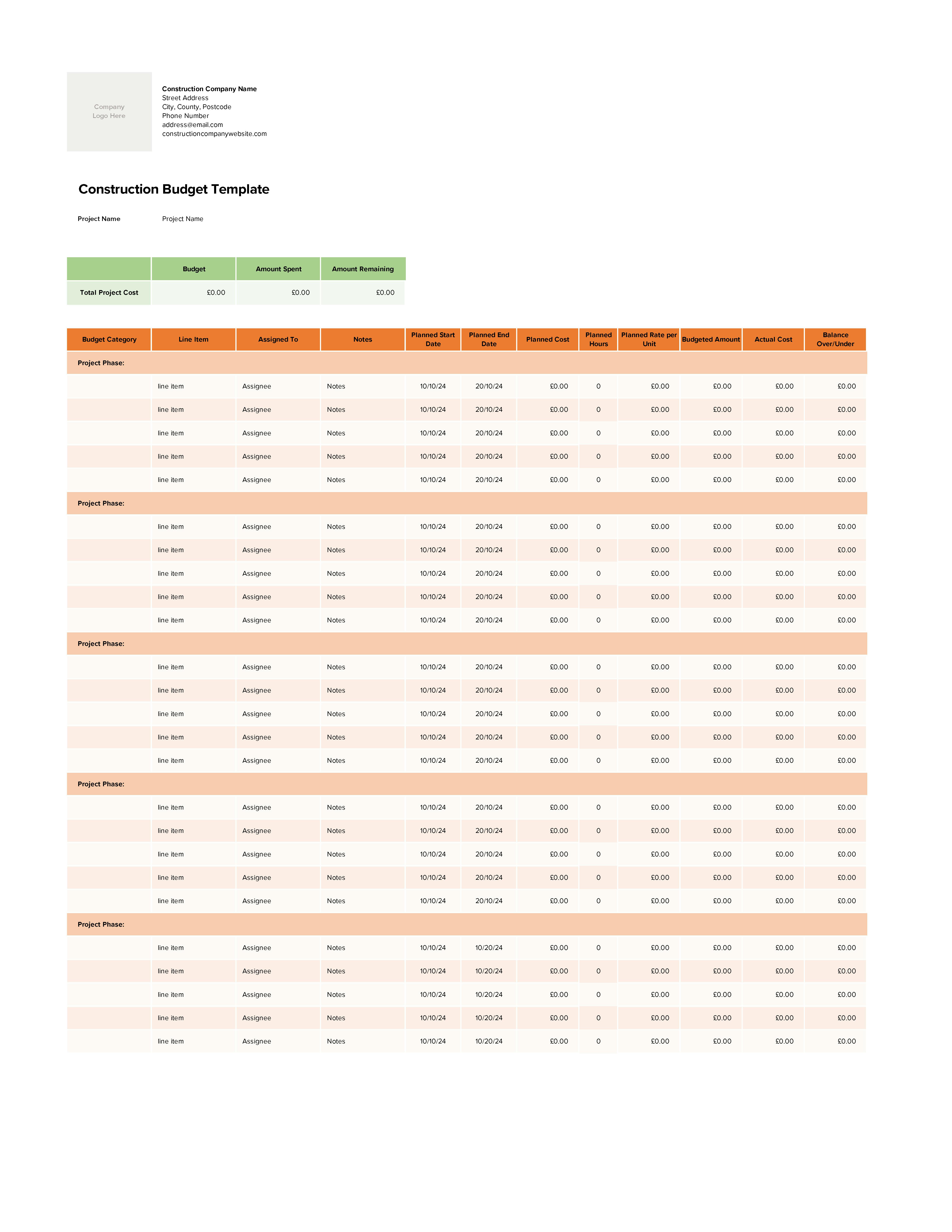
Download Our Free Construction Budget Template for Excel
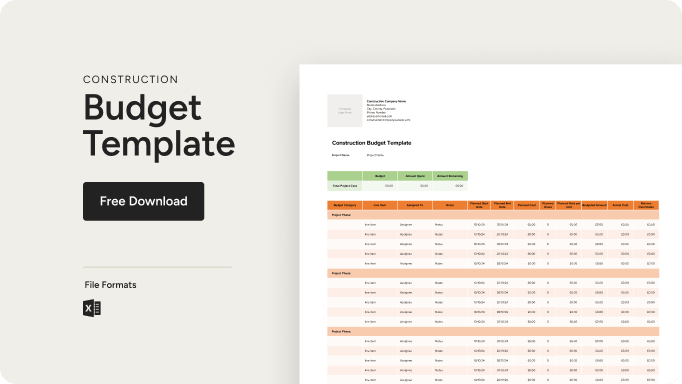
Download our free construction budget template and read on for our step-by-step guide on creating a project budget from scratch. Better still, discover how Houzz Pro's Construction Budget software can make tracking employee time, expenses, projects and activities a breeze.

How to Create a Construction Budget
1. Initial Planning and Research
Thorough project analysis during the pre-construction phase is crucial for forecasting the projected costs and feasibility of the job. Start by defining the project's goals and its requirements, such as materials and a cost estimate. Speak to suppliers to understand viability, and look back at data from similar projects for comparison. This collective information will give you a good base from which to begin your realistic construction project budget.
2. Defining the Project Scope
This step involves accurately detailing the work involved in every step of the project carried out by contractors, subcontractors and suppliers, ensuring the actual costs associated with each activity are accounted for.
3. Estimating Costs
Accurately estimating project costs will avoid potential cost overruns and losses. With high-level estimating that takes into account direct and indirect costs, labour costs, and overheads, project managers can identify potential hazards, develop realistic timelines, and provide contingency plans to ensure efficient construction budgets.
4. Using a Construction Budget Template
One of the biggest advantages of using our free standardised template is that it will save you time, allowing you to use the template repeatedly according to your needs. The standardised format will also ensure all your costs are covered, make it super easy to update, and it will reduce the risk of errors.
Software for Construction Budgeting
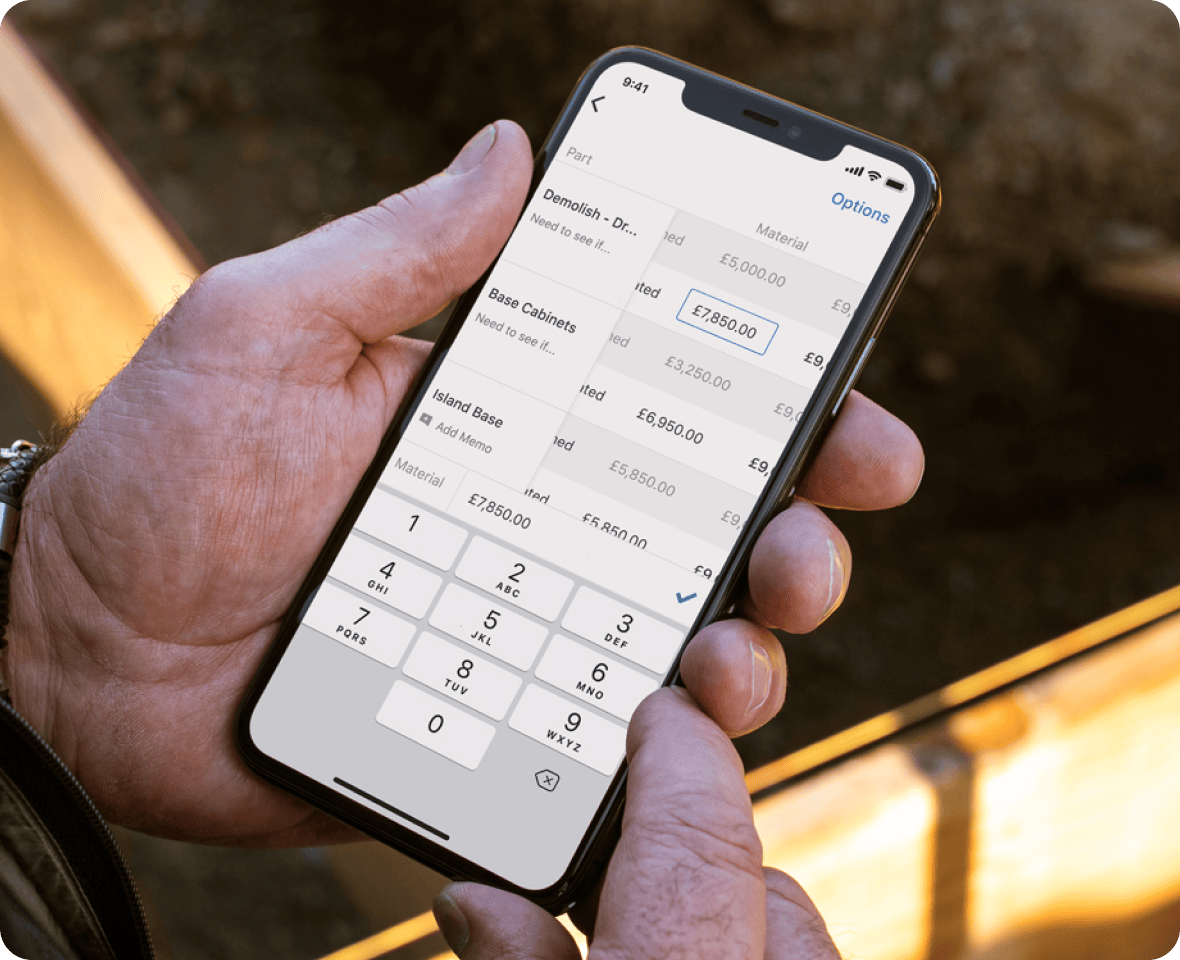
Our downloadable template will certainly do the job, however, Houzz Pro's construction budget software will get it done quicker, more precisely and with much less effort. Gone are the days of meticulous calculations, confusing change orders, and tedious expense tracking. With Houzz Pro's construction cost tracking software, you can effortlessly track employee time, expenses, construction projects and activities, anytime and anywhere.
Working in construction, you know that tracking progress from start to finish is non-negotiable for turning a project into profit. Houzz Pro's construction budget software takes the hassle out of tracking every minute and penny, while its construction timekeeping software is synced and backed up to the cloud whether you’re at your desk or out on the job site, so you never have to worry about losing your data.
Conclusion
A diligent and detailed budget in construction management can make all the difference between a project that is completed on time and within the estimated cost, and a financially draining project that impacts the construction firm's performance. Adopting innovative construction management software will become the cornerstone of your construction project, simplifying the costing process, minimising risks and enhancing project efficiency, so you can deliver successful and profitable projects every time and grow your business.